

What is the wider impact of Scottish Child Payment? New Workshop Summary Published
Category: Blogs
17 September 2026
What is the wider impact of Scottish Child Payment (SCP)?
That was the question at the heart of a recent workshop hosted by ADR Scotland in partnership with the University of Glasgow. Bringing together researchers, policymakers, local government, third-sector organisations and people with lived experience, the event explored emerging evidence on how the Scottish Child Payment (SCP) may influence a range of outcomes for children and families, including financial wellbeing, health, education and parental employment.
Presentations showcased new and ongoing research on the impact of the SCP, while roundtable discussions identified priorities for future research, evaluation and data development. A recurring message throughout the day was that understanding the full impact of the SCP requires looking beyond poverty measures alone and considering SCPs role within a wider system that includes employment, childcare, housing, health and education.
Discussions also highlighted the importance of linked administrative data, stronger cross-sector collaboration and embedding lived experience in both research and policy development. Participants emphasised the need to continue to build a robust evidence base that can support future decision-making and help improve outcomes for children and families across Scotland.
Professor Anna Pearce, Professor of Social Epidemiology and Child Health Equity at the University of Glasgow notes:
“This co-produced research agenda goes beyond identifying priorities for future research. It calls on us all to communicate evidence clearly, challenge misinformation, and ensure that children’s rights and equity remain central”
Dr Serena Pattaro, Senior Research Fellow at University of Glasgow and Lead for “Work, welfare and the economy” research theme at ADR Scotland, highlighted:
“It is crucial that we lay the foundations for the data infrastructure needed to understand the longer-term effects of the Scottish Child Payment (SCP). Linked administrative data, alongside other data resources, can help us build a more complete picture of how the payment affects children and families on low incomes. This includes looking beyond poverty and financial outcomes to understand its potential impacts on children’s health and wellbeing, education and future employment, as well as the circumstances of their parents and siblings. Building this evidence base will be essential to informing future policy development and decision-making.”
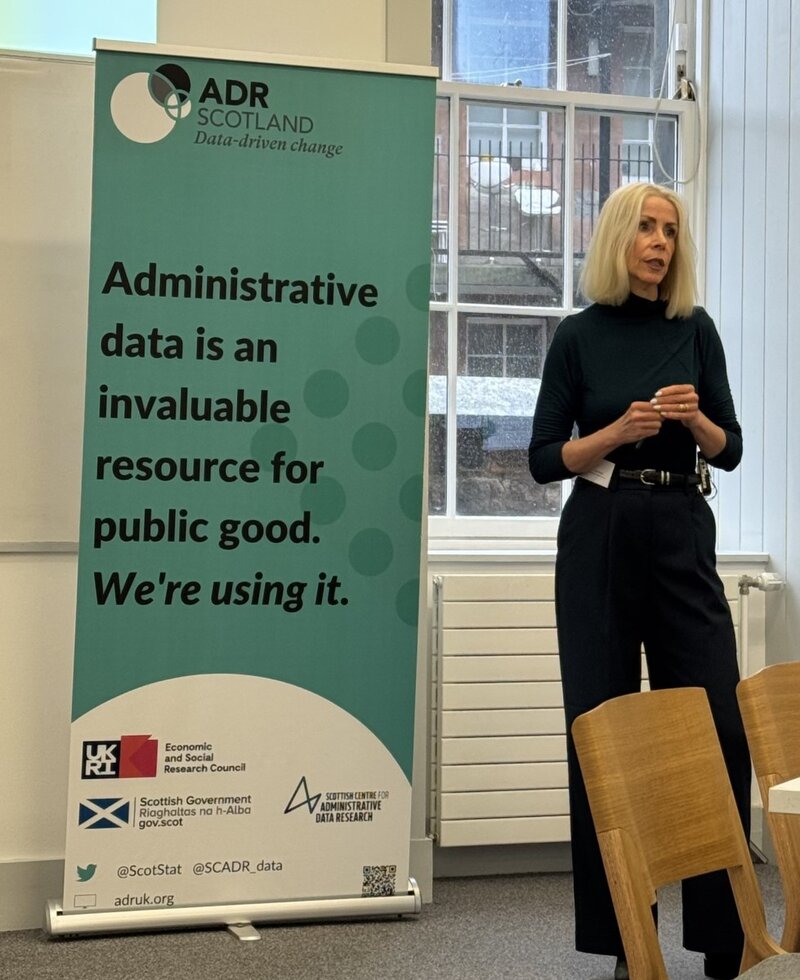
The workshop was hosted by Professor Linda Bauld, Chief Social Policy Adviser at Scottish Government and the Bruce and John Usher Chair in Public Health at the Usher Institute, University of Edinburgh:
Administrative data is such a powerful resource to inform and evaluate policy, including the Scottish Child Payment (SCP). This event outlined how existing research conducted by Scottish Government analysts, academics and Administrative Data Research Scotland is improving understanding of the effects of the payment on poverty, financial wellbeing and wider impacts.
Future research will examine longer term outcomes and make important contributions to policy decisions regarding the SCP. The event also provided an important opportunity to strengthen current collaborations and build new ones, and highlighted the importance of working across sectors to address child poverty.
For those looking for a brief overview, we've also produced a condensed event summary. Please get in touch if you would like a plain text version of any of our documents related to this event.
Associated research
Find out more about our associated research project: Evaluating the labour market impacts of welfare benefits in Scotland and across the UK.