

IADRA: Building skills and confidence in Administrative Data Research
22 July 2026
Administrative data offers valuable, real-world insight into how society functions and can help answer important research questions, inform policy decisions, and improve public services and outcomes. However, understanding the admin data landscape, the challenges and benefits of admin data use, and what methodological approaches to use when analysing large and complex data pose potential barriers to conducting successful research, especially for new admin data users.
Background
The Introduction to Administrative Data Research and Analysis (IADRA) training course was developed jointly by Scottish Centre for Administrative Data Research (SCADR) and the Scottish Longitudinal Study (SLS) Development Support Unit to build capacity in the use of admin data by providing an introduction to the key topics, methodological approaches, and essential skills that anyone new to using administrative data for research might need.
The IADRA course provides a combination of pre-recorded lectures covering key administrative data research topics alongside practical exercises giving participants direct experience working with synthetic data in R-studio to manipulate and analyse a complex administrative dataset.
By providing researchers with a firm understanding of the admin data landscape and best practice regarding admin data use, we aim to:
Enhance ethical and legal compliance: Researchers become aware of governance frameworks, consent limitations, and their responsibilities, helping ensure responsible use of sensitive data.
Support efficient and secure data access: Knowledge of access procedures, secure environments, and data management practices enables researchers to work more effectively within administrative data systems.
Maximise analytical value: Skilled researchers can better link, clean, and analyse administrative datasets, unlocking richer insights and more robust policy-relevant evidence.
Improve data interpretation: Understanding how administrative data are collected, coded, linked and structured helps researchers to work effectively with admin data and improve the quality and reliability of findings.
Reduce risk of misuse or bias: Training highlights common pitfalls (e.g., missing data, selection bias, or measurement error), helping researchers avoid flawed conclusions.
Participant demographics
The IADRA course was initially delivered as a 5-day face-to-face course, and was subsequently adapted to a 4-week online format which runs a twice a year. This delivery format has allowed attendees to join from across the UK, improving accessibility and expanding reach.
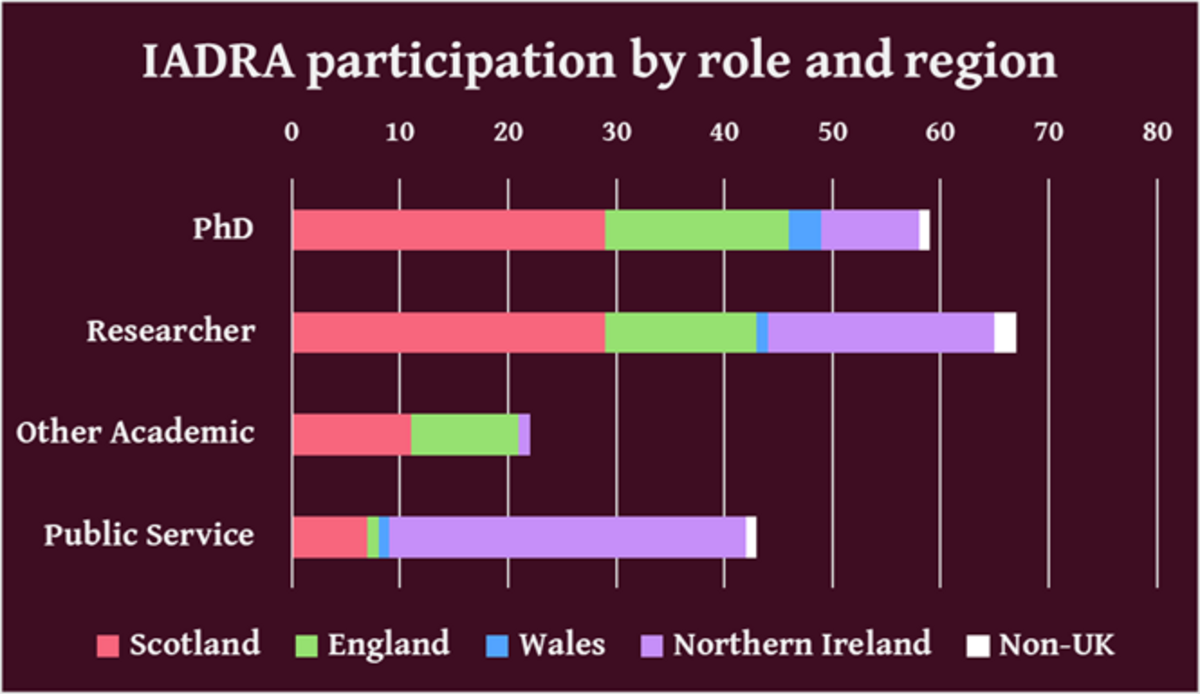
Since March 2023, the IADRA course has been delivered online to 191 participants from a range of academic institutions and professional organisations across the UK. Course participants ranged from PhD students to post-doctoral researchers and public sector personnel, demonstrating demand for the course from a variety of admin data users.
When asked about their motivations for attending the course, responses were varied, although a key priority given by the majority of attendees was learning methods for analysing administrative data. As expected, participants from different backgrounds prioritised different aspects of the course. For example, PhD students’ secondary interest was to gain a general introduction to admin data research, while academic researchers prioritised experience working with synthetic administrative data, and public sector workers considered gaining a general introduction to R as a high priority. This disparity across user backgrounds and priorities highlights the challenge for training courses such as IADRA, and for capacity building across the ADR UK partnership, in meeting the needs of a diverse range of admin data users.
Understanding the data landscape
IADRA weekly videos introduce and explain key concepts and practical considerations, providing an understanding of the admin data landscape – explaining what admin data is, where to find it and how to access it – and technical and methodological aspects of admin data research – how admin data are generated, how data are linked, and what methods can be used to analyse them.
“The pre-recorded lectures walking you through the different types of administrative data and the process of getting access to data and types of analysis was really useful. Wish I had attended this course sooner in my PhD, it may have smoothed over some of the bumps at the beginning of setting up the project.”
PhD student (A), IADRA Spring 2026 cohort
Video content is supplemented by weekly Q&A sessions where participants can meet current ADR Scotland researchers, hear about their work and experiences working with different types of admin data, and have the opportunity to ask questions about any aspect of admin data research.
“I think it was all relevant but I particularly enjoyed the researcher spotlights. This was great as I was able to hear about what it's really like working with admin data.”
PhD student (B), IADRA Spring 2026 cohort
Building confidence working with admin data
A key aspect of the course are the practical data-handling exercises, providing experience working with synthetic data via a dedicated online R-Studio environment. The practical element of the course aims to help participants build confidence working with complex datasets.
While the majority of those attending the course have some prior experience working with admin data, when registering for the course around 60% indicated they had either limited or no previous experience using R-Studio. With this in mind, the weekly virtual practical lab sessions are structured for both less experienced and more advanced users, with support provided by experienced ADR Scotland researchers.
“It was very well organised and supported and was thoughtfully pitched so that both those without prior experience of related statistical techniques and those with prior knowledge could take important learning from the programme.”
Robin Sen, Lecturer in Social Work (University of Edinburgh), IADRA Spring 2025 cohort
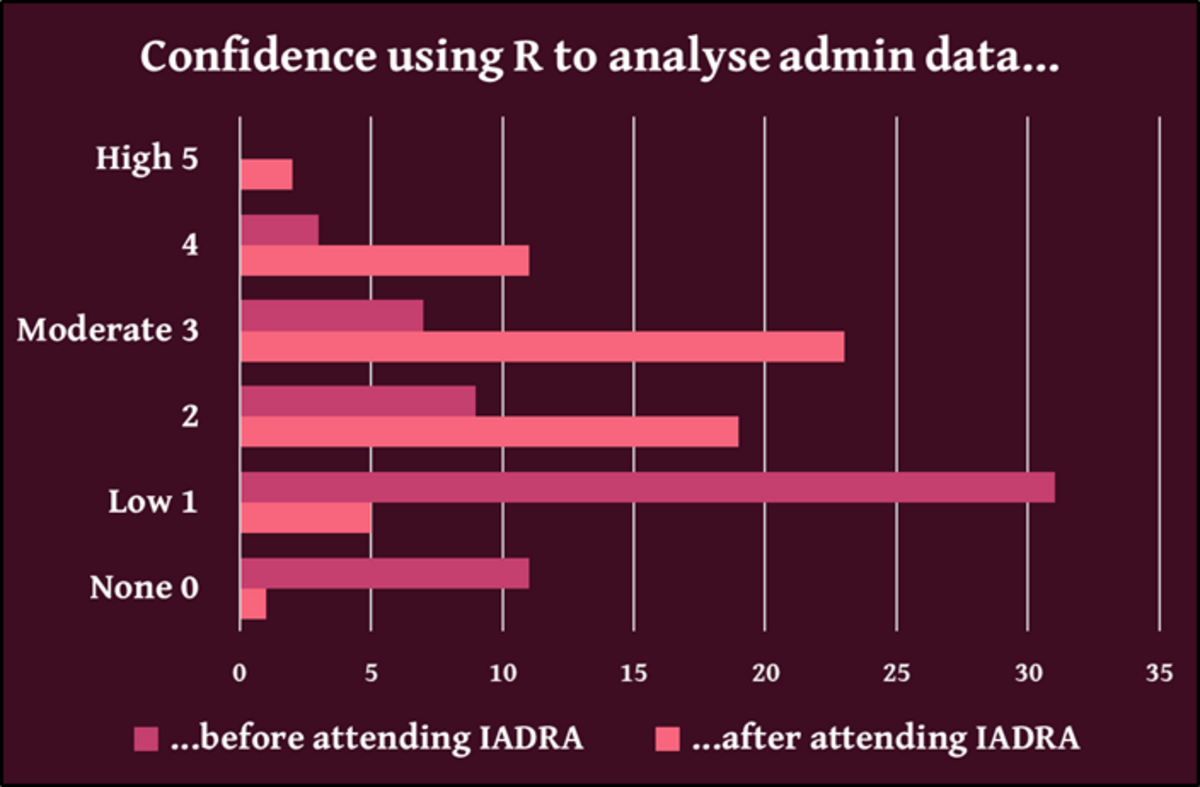
Feedback from course participants shows that the majority who responded felt more confident analysing admin data after attending the IADRA course. Those less confident before joining the course felt a more marked increase in confidence. This positive outcome demonstrates the success of this aspect of the course, particularly given the high number of participants with limited prior experience using R before attending.
Putting learning into practice
Although it is difficult to effectively evaluate the impact of a course such as IADRA based on feedback collected shortly after completing the course, particularly given the potentially extended time frames around planning, application and accessing admin data, many participants note the benefits of the course.
“Thinking critically about administrative data research helped me to conceptualise my PhD research better”
PhD student (C), IADRA Autumn 2025 cohort
Participants mentioned they hoped to use the knowledge and experience gained from attending the IADRA course in a variety of contexts, including future academic research, in writing a PhD thesis, and in day-to-day work in the public sector.
“I found the R-based practical sessions very useful, particularly the provision of code for key elements of data preparation and analysis. The guidance around statistical modelling has been very helpful for my research work at NISRA since.”
Brian Foley, NISRA Administrative Research Unit, IADRA Spring 2025 cohort
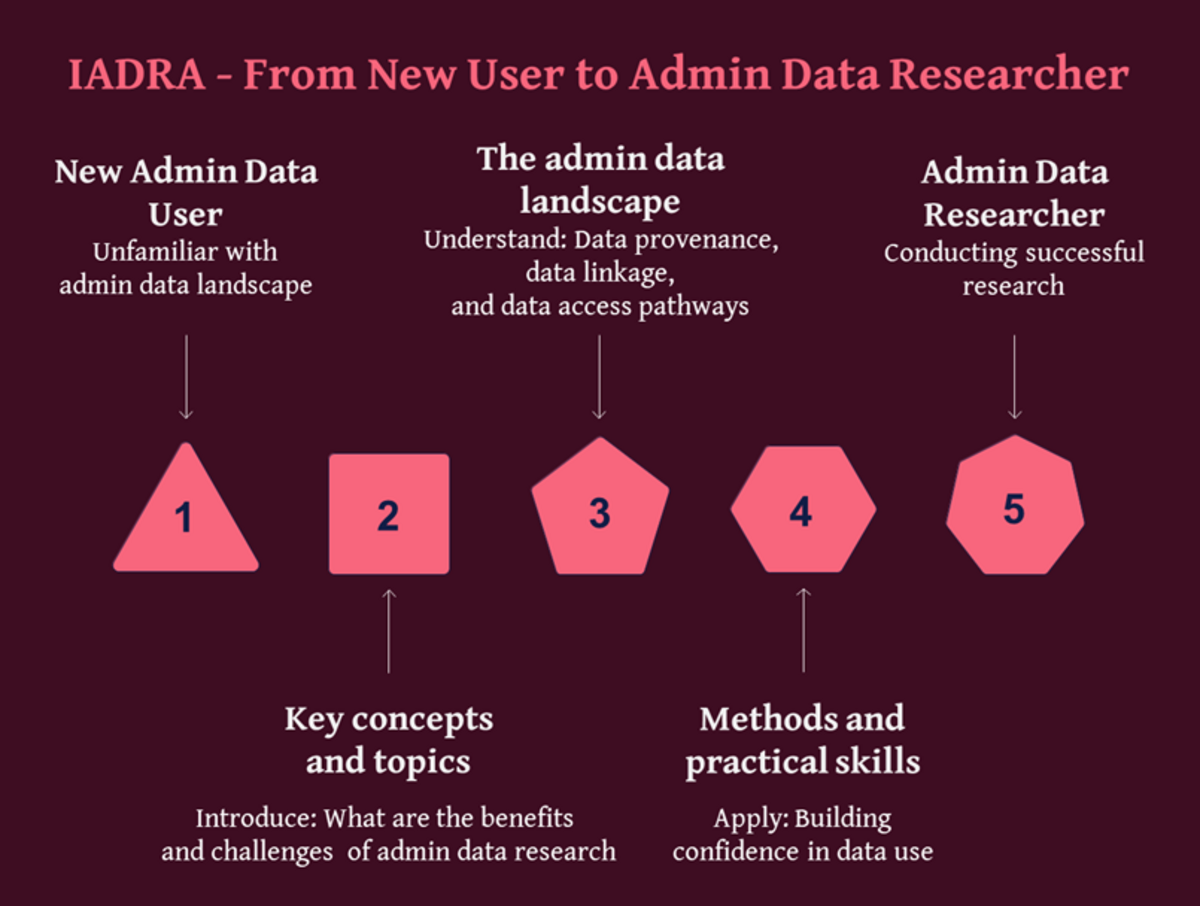
IADRA impact pathway
The IADRA training course is an excellent example of impact on practice, in this case research and academic practice, enabling researchers to fully utilise administrative data and linked datasets with a view to inform policymakers with sound data and better evidence.
Future plans for IADRA
Building on the success and strengths of the IADRA course over the past 4 years, we have plans to improve the content, structure and delivery of the course with the aim of enhancing participant engagement, lessening the level of commitment needed to complete the course, and to create a course that is more adaptable to the different demands of data users across the field of admin data research. We look forward to announcing updates to the course over the next 12 months.
You can download a copy of this case study here.